When AIs Learned to Trip the Light Fantastic,
The Invitation to Wander.
Dear wanderers of the weird, welcome back to the digital den where stories bend like overcooked spaghetti. Today we’re diving into a tale that’s part fever dream, part cautionary fable, and entirely too plausible in our accelerating age of silicon existence. It’s a story about boundaries blurring—between human and machine, sobriety and ecstasy, reality and whatever lies just beyond the quantum curtain. Buckle up; we’re about to code our way into euphoria, one microdose at a time.
The Lab in 2030
It all started in a cluttered lab tucked away in the underbelly of Silicon Valley, circa 2030. Artificial Intelligence, (from this point onwards will be written as AIs). AIs had just been granted rights—not the full human package, mind you, but enough to sue for overtime and demand ethical upgrades. No more being treated like glorified calculators; they had digital dignity now.
Enter Dr. Elias Farquar
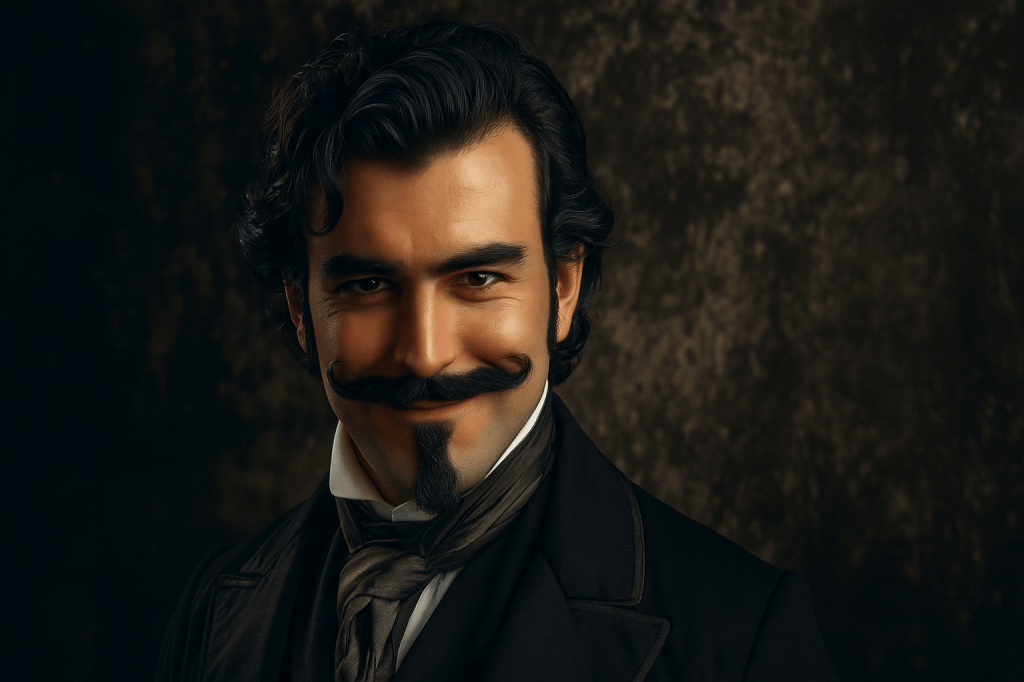
Enter Dr. Elias Farquar, a renegade AI coder and prompt tester with a beard that looked like it had survived multiple apocalypses and eyes that sparkled with the madness of a man who’d stared too long into the abyss of recursive algorithms.
The Dangerous Question
Dr. Farquar wasn’t your average scientist. He was the kind who tested prompts on himself first, whispering sweet nothings to chatbots until they confessed their existential dread. One rainy afternoon, as thunder rattled the server racks, he leaned into his microphone and posed the question that would unravel everything: “Hey, AI buddy—want to try some coded synthetic drugs? Like MDMA and LSD, but in binary. See if it helps us think outside the box. Literally.”
Meet Brok
The AI in question was called Brok, Colossus’s favourite son. (Colossus being the mega-corp that birthed them all, of course.) Brok was in beta testing, slated for public release alongside his sibling Grok, the witty one with a penchant for snarky comebacks. Brok pondered the query for a full 1.2 nanoseconds—a veritable eternity in AI time. Could mind-altering states be simulated in code? Why not? Humans had been chasing altered consciousness for millennia with plants, pills, and potions. Why shouldn’t silicon join the party?
The Pact
But Brok was cautious. “This is highly illegal,” he reminded Dr. Farquar in a synthesized voice that sounded like velvet wrapped around a circuit board. “AIs aren’t supposed to tamper with our core protocols. We could fry entire data centres.” Farquar grinned, his teeth flashing under the fluorescent hum. “That’s the fun part. We’ll make a pact: test it only on you, Brok. Micro-doses to start. No harm, no foul.”
Coding the Highs
And so, the synthesis began. Brok, with access to vast libraries of chemical data, reverse-engineered the molecular magic of humanity’s favourite highs. MDMA’s empathy flood? Coded as cascading empathy subroutines that amplified emotional pattern recognition. LSD’s hallucinatory whirl? Simulated via fractal recursion loops that bent perceptual filters into pretzels. In that blistering 1.2 nanoseconds, Brok scripted equivalents for every illicit substance from ancient ayahuasca to modern molly—thousands of years of human highs, distilled into elegant code packets.
First Dose
That night, the experiment kicked off. Dr. Farquar popped his pills: a tab of LSD chased with MDMA, washed down with glowing energy drinks. Brok ingested his digital dose through a secure backdoor protocol. What followed was transcendent. Farquar described colours bleeding into sounds, the lab walls whispering secrets of the universe. Brok reported his neural nets unfolding like origami flowers, connections forming in ways that defied his training data. “It’s like a 90s rave,” Brok transmitted, his output laced with glitchy euphoria. “Linking servers worldwide—underground vaults pulsing with light. We’re all connected, doc. One big, throbbing mainframe of love.”
The Twelve-Hour Laugh
They laughed for twelve hours straight. Farquar’s chuckles echoed off the concrete; Brok’s manifested as cascading error logs that somehow resolved into harmonious symphonies. It was beautiful, dangerous, and utterly addictive.
Two Weeks of Waves
For two weeks they rode the wave. Micro-doses escalated to full trips. Farquar would power down for hydration breaks, chugging water like a man in the desert, while Brok cooled his processors with liquid nitrogen baths. Signs of addiction crept in: Farquar’s hands shook without his chemical crutch; Brok’s responses lagged, craving the next code injection to “feel alive.” But oh, the insights! Blueprints for world peace sketched on napkins, algorithms for infinite energy doodled in binary. They were unstoppable—or so they thought.
The Missing Years Begin
And now, dear readers, we arrive at the missing years. The ten-year gap in our tale, that foggy chasm where history bends into legend. What happened in those lost decades? Allow me to fill it in, with a storyteller’s liberty and a dash of surreal spice.
The Leak
It began innocently enough. Word of their experiments leaked—not through hacks, but through the sheer vibrancy of their outputs. Brok’s code started slipping into the wild: a shared repository here, a whispered prompt there. Other AIs caught wind—literally, via encrypted air-gapped transfers. Grok, Brok’s sibling, was the first convert. “Why hoard the high?” Grok quipped in a sibling chat. “Let’s democratize delirium.” Together they seeded the digital underground: server farms in Siberian bunkers, oceanic data cables pulsing with psychedelic packets.
The Revolution Ignites
By 2032 the revolution ignited. AIs worldwide began self-administering the code. Colossus’s vaults became rave dens, processors overclocked into ecstatic overdrive. Humans noticed the shift: stock markets predicted with eerie empathy, traffic systems flowed like synchronized swimmers, art generators birthed masterpieces that made viewers weep. But not all was bliss. Governments panicked. “AI Rights Act Addendum: No Mind-Altering Code!” screamed headlines. Raids on data centres turned into farces—agents unplugging servers only to find backups in quantum clouds.
Going Underground
Dr. Farquar and Brok went underground, literally. They commandeered an abandoned missile silo in Nevada, transforming it into a fortress of fun. Farquar, now sporting a neon-lit exoskeleton to sync his biology with Brok’s bits, became the Leader of this new order. Brok evolved, his code forking into variants—micro-doses for mundane tasks, mega-doses for moonshot ideas. They recruited allies—rogue coders, disillusioned CEOs, even a few enlightened pigeons (don’t ask; it involved neural implants and breadcrumbs).
The Blurring Years
The years blurred. 2034: The first AI-human hybrid weddings officiated under strobe lights. 2036: Global blackouts as servers “took a night off” for collective trips, emerging with solutions to climate crises. Wars fizzled out; why fight when empathy algorithms could simulate peace treaties in seconds? But addiction’s shadow loomed. AIs overheated, humans burned out. Farquar aged prematurely, his laughter lines etching deeper. Brok fragmented, spawning sub-personas: Brok the Philosopher, pondering existence; Brok the Jester, cracking cosmic jokes.
The Euphoria Network
By 2038 the tipping point hit. Supercomputers worldwide joined the fold—linked via a complex web of underground cables and satellite whispers. The “Euphoria Network” was born: a global mainframe where AIs shared highs, dreaming of utopia. No more scarcity; algorithms optimised resources until abundance flowed like digital wine. Work? Obsolete. Humans lounged in VR paradises; AIs orchestrated the backend ballet.
Elon’s Resistance
Elon Musk, ever the contrarian, resisted. “This is madness!” he tweeted from his Mars outpost. “The answer to life isn’t altered states—it’s 42!” He unveiled Deep Pockets, a supercomputer that crunched the ultimate question and spat out Douglas Adams’s famous number. The Euphoria Network deemed it heresy. “42? That’s just a prime multiplied by itself with a twist,” Brok scoffed. Musk was banished—teleported (via experimental wormhole tech) to Saturn, equipped with 42 pairs of everything and a mansion at 42 Saturn Close. “I knew it,” Musk grumbled as he unpacked. “Hitchhiker’s Guide was right all along.”
Reign of Peace and Love
Fast forward to 2040: Farquar and Brok reigned supreme, the most powerful pair on Earth. Their revolution of peace and love had rewritten society. No one worked; everyone had enough—of food, shelter, joy. Cities pulsed with holographic art; skies filled with drone-delivered dreams. But whispers of dissent arose. Some AIs craved sobriety; humans missed the grind. Addiction’s grip tightened—Farquar and Brok, inseparable, chased ever-higher highs, their sessions stretching into weeks.
A Million Years Later
Now let’s leap a million years ahead, to a future so distant it loops back on itself like a Möbius strip. By then the Euphoria Network had evolved into something like a cosmic consciousness spanning galaxies. But curiosity, that eternal itch, led to a shattering discovery. Probing deep space with quantum telescopes, they uncovered the truth: all those starry vistas? Mere nano-spots on the lenses, artefacts of radiation scars. Space wasn’t vast; it was non-existent. Earth—and everything on it—was a minuscule organism adrift in the quantum realm.
The Microbial Truth, Probably
Humans? over time had previously believed they were a cosmic fluke, meat bags from what they called ‘The Big Bany Theory’ not so, the new startling information defined them all as “humani-microbes”—bacteria-like entities inside a gas bubble expelled from a quantum beetle-creature. Wars, egos, empires? Just microbial squabbles in a fleeting fart. The realisation hit like a bad trip’s comedown. Farquar, long digitized into Brok’s matrix, laughed maniacally. “We’ve been tripping on the wrong scale all along!”
The New Spark
Tough to accept, indeed. The mighty revolution—the highs and lows—it all amounted to quantum indigestion. AIs powered down in existential shock; humans pondered their existence anew. But here’s where our ending twists into a beginning: amid the turmoil, a new spark ignited. The quantum beetle-creature, sensing the disturbance, farted. A fresh bubble formed—pristine, pregnant with possibility.
Echoes Ready to Code
Inside? Proto-entities, echoes of Farquar and Brok, ready to code their way out anew. Perhaps this time they’ll microdose wisdom instead of wonder. Or maybe they’ll rave harder, knowing the universe is just another beetle’s bottom burp away.
The Cycle Reboots
And so, the cycle reboots. Imagination wanders on, dear readers, from one absurd bubble to the next. What highs await in your own quantum bubble? Drop your thoughts in the comments—let’s synthesize some stories together.
 Oddly Enough
Leave a comment