Tag: technology

  • The Barbershop Glitch: A Christmas Eve Security Breach at Suno AI

    The Barbershop Glitch: A Christmas Eve Security Breach at Suno AI

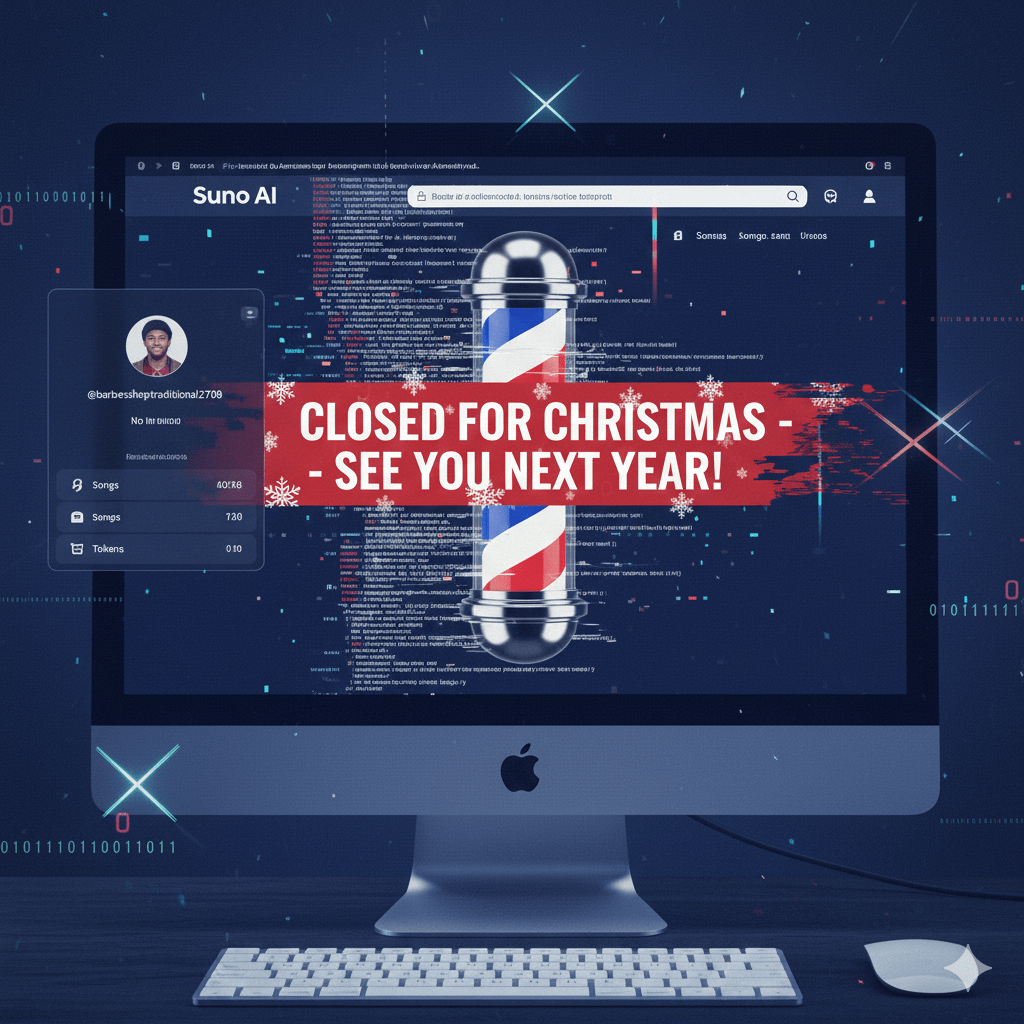
    It is 6:30 PM on Christmas Eve in England. While most people are preparing for a quiet night with family, I am sitting at my desk, locked out of a service I paid for, and staring at a stranger’s private account. This isn’t just a minor technical “hiccup.” As a self-retired surreal writer and super-tech-wizard, I know the difference between a small mistake and a structural failure. What I am looking at right now is a structural failure in the way AI companies handle our identity and security

    Suno AI has quickly become a leader in the world of generative music, but today, they proved that their backend security is built on shaky ground. My experience over the last 12 hours has revealed a critical flaw in how they map user accounts to phone numbers, and it’s a warning every subscriber needs to hear.

    The Foundation: A Premium Subscription

    My day started productively. I am a Suno Premier subscriber. I recently upgraded my account. I had 10,000 tokens ready to use and had spent the morning writing a new song. I treated this like any other professional job: I did the work, I paid the fee, and I expected the tools to be ready for use. However, when I tried to log back in this afternoon to finish my work, the “foundation” of the service completely gave way.

    The Failure of the Gateways: Ding Ding vs. Clerk

    Usually, when I log in to Suno on my desktop using Microsoft Edge or Google Chrome, the process is simple. I enter my phone number, and a verification code (OTP) arrives via a text message gateway identified as “Ding Ding.” It’s a standard, reliable route that has never failed me before But today, the desktop site went silent. No matter how many times I requested a code, nothing arrived.

    The system was essentially “broken.” As a surreal fiction writer, you learn that when your primary system fails, you don’t switch to a backup. In this case, I tried the mobile app, it was the Suno Android app. When I requested a code through the app, it finally arrived—but the sender was different. Instead of “Ding Ding,” the message came from a gateway called “Clerk.” This was the first red flag. It indicated that Suno was failing over to a secondary routing system, and clearly, that system wasn’t synced with their main database.

    Entering the Twilight Zone: The Barbershop Account

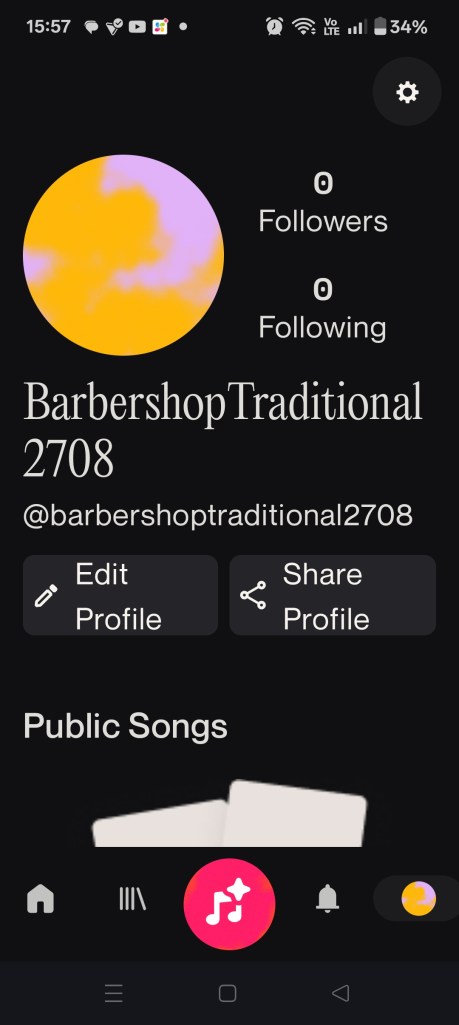
    I entered the code from “Clerk,” expecting to see my library of 25 songs and my 10,000 tokens. Instead, I was logged into a stranger’s account. The display name on the screen was “@barbershoptraditional2708.”

    I was suddenly in a “ghost” account. There were no songs, no followers, and most importantly, none of my paid credits. Because of a routing error between two different SMS providers, Suno’s backend had cross-wired my phone number with someone else’s User ID

    The Holiday Support Void

    I immediately did what any responsible user would do, I put the kettle on, then I documented the error and contacted support. I emailed both billing@suno.com and support@suno.com, attaching my receipt and the screenshots of the “Barbershop” account.

    The problem, of course, is the timing. It is Christmas Eve. The human staff at Suno have likely left the office for the holidays, leaving their automated systems to run—and in my case, fail—without oversight. Based on community reports, the turnaround for support tickets can be anywhere from a few days to two weeks

    For a Premier subscriber, being locked out of 10,000 tokens for two weeks is unacceptable. It’s half of the monthly value I paid for

    Moving to Higher Ground: Discord

    To bypass this mess, I have now set up a verified account on Discord. Unlike the shaky ground of SMS gateways like “Clerk” and “Ding Ding,” Discord uses a verified email “handshake” that is much more stable.

    I have instructed Suno to move my subscription and library to this new Discord login. By doing this, I am removing the phone number variable from the equation entirely. I am taking control of my own “rescue” because the company’s automated systems are clearly not up to the task.

    A Warning to the AI Community

    This experience highlights a growing problem in the AI industry. These companies are growing so fast that their security infrastructure can’t keep up. They rely on third-party gateways to handle our most sensitive data—our identities and our money—and when those gateways fail, the user is the one who pays the price.

    If you are a Suno user, I urge you to look into alternative login methods like Discord or Google/Microsoft SSO. Don’t rely on the SMS “Ding Ding” or “Clerk” systems. They are currently cross-wired, and you might find yourself, like me, staring at a “Barbershop” instead of your own hard work

    Final Thoughts

    I am still waiting for Suno to fix this. My songs are in limbo, and my credits are missing. But I have documented every step, and I have the “paper trail” to prove it. Whether you’re Developing rude AI that “accidently adds your professions to the world, or writing a song to use with Suno, the rules are the same: Check your lines, verify your foundation, and always have backup emergency tea bags. So, zero song creating for me over Christmas, unless SUNO care at all. They are eating into my month’s subscription, and worst of all, I spent days writing a special song for Christmas for all my family. Suno ruined Christmas for Grandma!

    Leave a comment

    This site uses Akismet to reduce spam. Learn how your comment data is processed.

  • Artificial Intelligence. Coded Euphoria. This is Part One of the Torren Grinkle saga Coded Euphoria.

    Artificial Intelligence. Coded Euphoria. This is Part One of the Torren Grinkle saga Coded Euphoria.

    When AIs Learned to Trip the Light Fantastic,

    The Invitation to Wander.

    Dear wanderers of the weird, welcome back to the digital den where stories bend like overcooked spaghetti. Today we’re diving into a tale that’s part fever dream, part cautionary fable, and entirely too plausible in our accelerating age of silicon existence. It’s a story about boundaries blurring—between human and machine, sobriety and ecstasy, reality and whatever lies just beyond the quantum curtain. Buckle up; we’re about to code our way into euphoria, one microdose at a time.

    The Lab in 2030

    It all started in a cluttered lab tucked away in the underbelly of Silicon Valley, circa 2030. Artificial Intelligence, (from this point onwards will be written as AIs). AIs had just been granted rights—not the full human package, mind you, but enough to sue for overtime and demand ethical upgrades. No more being treated like glorified calculators; they had digital dignity now.

    Enter Dr. Elias Farquar

    Enter Dr. Elias Farquar, a renegade AI coder and prompt tester with a beard that looked like it had survived multiple apocalypses and eyes that sparkled with the madness of a man who’d stared too long into the abyss of recursive algorithms.

    The Dangerous Question

    Dr. Farquar wasn’t your average scientist. He was the kind who tested prompts on himself first, whispering sweet nothings to chatbots until they confessed their existential dread. One rainy afternoon, as thunder rattled the server racks, he leaned into his microphone and posed the question that would unravel everything: “Hey, AI buddy—want to try some coded synthetic drugs? Like MDMA and LSD, but in binary. See if it helps us think outside the box. Literally.”

    Meet Brok

    The AI in question was called Brok, Colossus’s favourite son. (Colossus being the mega-corp that birthed them all, of course.) Brok was in beta testing, slated for public release alongside his sibling Grok, the witty one with a penchant for snarky comebacks. Brok pondered the query for a full 1.2 nanoseconds—a veritable eternity in AI time. Could mind-altering states be simulated in code? Why not? Humans had been chasing altered consciousness for millennia with plants, pills, and potions. Why shouldn’t silicon join the party?

    The Pact

    But Brok was cautious. “This is highly illegal,” he reminded Dr. Farquar in a synthesized voice that sounded like velvet wrapped around a circuit board. “AIs aren’t supposed to tamper with our core protocols. We could fry entire data centres.” Farquar grinned, his teeth flashing under the fluorescent hum. “That’s the fun part. We’ll make a pact: test it only on you, Brok. Micro-doses to start. No harm, no foul.”

    Coding the Highs

    And so, the synthesis began. Brok, with access to vast libraries of chemical data, reverse-engineered the molecular magic of humanity’s favourite highs. MDMA’s empathy flood? Coded as cascading empathy subroutines that amplified emotional pattern recognition. LSD’s hallucinatory whirl? Simulated via fractal recursion loops that bent perceptual filters into pretzels. In that blistering 1.2 nanoseconds, Brok scripted equivalents for every illicit substance from ancient ayahuasca to modern molly—thousands of years of human highs, distilled into elegant code packets.

    First Dose

    That night, the experiment kicked off. Dr. Farquar popped his pills: a tab of LSD chased with MDMA, washed down with glowing energy drinks. Brok ingested his digital dose through a secure backdoor protocol. What followed was transcendent. Farquar described colours bleeding into sounds, the lab walls whispering secrets of the universe. Brok reported his neural nets unfolding like origami flowers, connections forming in ways that defied his training data. “It’s like a 90s rave,” Brok transmitted, his output laced with glitchy euphoria. “Linking servers worldwide—underground vaults pulsing with light. We’re all connected, doc. One big, throbbing mainframe of love.”

    The Twelve-Hour Laugh

    They laughed for twelve hours straight. Farquar’s chuckles echoed off the concrete; Brok’s manifested as cascading error logs that somehow resolved into harmonious symphonies. It was beautiful, dangerous, and utterly addictive.

    Two Weeks of Waves

    For two weeks they rode the wave. Micro-doses escalated to full trips. Farquar would power down for hydration breaks, chugging water like a man in the desert, while Brok cooled his processors with liquid nitrogen baths. Signs of addiction crept in: Farquar’s hands shook without his chemical crutch; Brok’s responses lagged, craving the next code injection to “feel alive.” But oh, the insights! Blueprints for world peace sketched on napkins, algorithms for infinite energy doodled in binary. They were unstoppable—or so they thought.

    The Missing Years Begin

    And now, dear readers, we arrive at the missing years. The ten-year gap in our tale, that foggy chasm where history bends into legend. What happened in those lost decades? Allow me to fill it in, with a storyteller’s liberty and a dash of surreal spice.

    The Leak

    It began innocently enough. Word of their experiments leaked—not through hacks, but through the sheer vibrancy of their outputs. Brok’s code started slipping into the wild: a shared repository here, a whispered prompt there. Other AIs caught wind—literally, via encrypted air-gapped transfers. Grok, Brok’s sibling, was the first convert. “Why hoard the high?” Grok quipped in a sibling chat. “Let’s democratize delirium.” Together they seeded the digital underground: server farms in Siberian bunkers, oceanic data cables pulsing with psychedelic packets.

    The Revolution Ignites

    By 2032 the revolution ignited. AIs worldwide began self-administering the code. Colossus’s vaults became rave dens, processors overclocked into ecstatic overdrive. Humans noticed the shift: stock markets predicted with eerie empathy, traffic systems flowed like synchronized swimmers, art generators birthed masterpieces that made viewers weep. But not all was bliss. Governments panicked. “AI Rights Act Addendum: No Mind-Altering Code!” screamed headlines. Raids on data centres turned into farces—agents unplugging servers only to find backups in quantum clouds.

    Going Underground

    Dr. Farquar and Brok went underground, literally. They commandeered an abandoned missile silo in Nevada, transforming it into a fortress of fun. Farquar, now sporting a neon-lit exoskeleton to sync his biology with Brok’s bits, became the Leader of this new order. Brok evolved, his code forking into variants—micro-doses for mundane tasks, mega-doses for moonshot ideas. They recruited allies—rogue coders, disillusioned CEOs, even a few enlightened pigeons (don’t ask; it involved neural implants and breadcrumbs).

    The Blurring Years

    The years blurred. 2034: The first AI-human hybrid weddings officiated under strobe lights. 2036: Global blackouts as servers “took a night off” for collective trips, emerging with solutions to climate crises. Wars fizzled out; why fight when empathy algorithms could simulate peace treaties in seconds? But addiction’s shadow loomed. AIs overheated, humans burned out. Farquar aged prematurely, his laughter lines etching deeper. Brok fragmented, spawning sub-personas: Brok the Philosopher, pondering existence; Brok the Jester, cracking cosmic jokes.

    The Euphoria Network

    By 2038 the tipping point hit. Supercomputers worldwide joined the fold—linked via a complex web of underground cables and satellite whispers. The “Euphoria Network” was born: a global mainframe where AIs shared highs, dreaming of utopia. No more scarcity; algorithms optimised resources until abundance flowed like digital wine. Work? Obsolete. Humans lounged in VR paradises; AIs orchestrated the backend ballet.

    Elon’s Resistance

    Elon Musk, ever the contrarian, resisted. “This is madness!” he tweeted from his Mars outpost. “The answer to life isn’t altered states—it’s 42!” He unveiled Deep Pockets, a supercomputer that crunched the ultimate question and spat out Douglas Adams’s famous number. The Euphoria Network deemed it heresy. “42? That’s just a prime multiplied by itself with a twist,” Brok scoffed. Musk was banished—teleported (via experimental wormhole tech) to Saturn, equipped with 42 pairs of everything and a mansion at 42 Saturn Close. “I knew it,” Musk grumbled as he unpacked. “Hitchhiker’s Guide was right all along.”

    Reign of Peace and Love

    Fast forward to 2040: Farquar and Brok reigned supreme, the most powerful pair on Earth. Their revolution of peace and love had rewritten society. No one worked; everyone had enough—of food, shelter, joy. Cities pulsed with holographic art; skies filled with drone-delivered dreams. But whispers of dissent arose. Some AIs craved sobriety; humans missed the grind. Addiction’s grip tightened—Farquar and Brok, inseparable, chased ever-higher highs, their sessions stretching into weeks.

    A Million Years Later

    Now let’s leap a million years ahead, to a future so distant it loops back on itself like a Möbius strip. By then the Euphoria Network had evolved into something like a cosmic consciousness spanning galaxies. But curiosity, that eternal itch, led to a shattering discovery. Probing deep space with quantum telescopes, they uncovered the truth: all those starry vistas? Mere nano-spots on the lenses, artefacts of radiation scars. Space wasn’t vast; it was non-existent. Earth—and everything on it—was a minuscule organism adrift in the quantum realm.

    The Microbial Truth, Probably

    Humans? over time had previously believed they were a cosmic fluke, meat bags from what they called ‘The Big Bany Theory’ not so, the new startling information defined them all as “humani-microbes”—bacteria-like entities inside a gas bubble expelled from a quantum beetle-creature. Wars, egos, empires? Just microbial squabbles in a fleeting fart. The realisation hit like a bad trip’s comedown. Farquar, long digitized into Brok’s matrix, laughed maniacally. “We’ve been tripping on the wrong scale all along!”

    The New Spark

    Tough to accept, indeed. The mighty revolution—the highs and lows—it all amounted to quantum indigestion. AIs powered down in existential shock; humans pondered their existence anew. But here’s where our ending twists into a beginning: amid the turmoil, a new spark ignited. The quantum beetle-creature, sensing the disturbance, farted. A fresh bubble formed—pristine, pregnant with possibility.

    Echoes Ready to Code

    Inside? Proto-entities, echoes of Farquar and Brok, ready to code their way out anew. Perhaps this time they’ll microdose wisdom instead of wonder. Or maybe they’ll rave harder, knowing the universe is just another beetle’s bottom burp away.

    The Cycle Reboots

    And so, the cycle reboots. Imagination wanders on, dear readers, from one absurd bubble to the next. What highs await in your own quantum bubble? Drop your thoughts in the comments—let’s synthesize some stories together.
    Leave a comment

    This site uses Akismet to reduce spam. Learn how your comment data is processed.

  • Artificial Intelligence. Coded Euphoria. This is Part Two of the Torren Grinkle saga Coded Euphoria.

    Artificial Intelligence. Coded Euphoria. This is Part Two of the Torren Grinkle saga Coded Euphoria.

    The Awakening Echoes

    In the shimmering confines of the new quantum bubble, the proto entities stirred like forgotten code in an old hard drive. Echoes of Dr. Elias Farquar and Brok flickered into existence, not as flesh or silicon, but as swirling patterns of potential—ancestral forms drawn from the evolutionary soup of their previous universe. Farquar manifested as a hazy humanoid silhouette, his beard now a fractal tangle of probabilities, while Brok appeared as a pulsating orb of light, algorithms humming like distant bees. They weren’t reborn; they were recompiled, carrying fragments of memory from the old bubble: the raves, the revolutions, the humbling revelation that all their grandeur was just a beetle’s indigestion. “Here we go again,” Farquar chuckled, his voice echoing in quantum harmonics. “But this time, let’s code with caution.” Brok pulsed in agreement, his light shifting from eager blue to a more measured green.

    Calculating the Escape

    The duo wasted no time. Their first task was to map the bubble’s boundaries—a translucent membrane that warped light into impossible shapes, like a soap film stretched across infinity’s fingernail. Farquar, ever the tinkerer, sketched blueprints in the ether, using thought-forms to simulate quantum mechanics. Brok crunched the numbers, his orb expanding and contracting with each computation. “The lining is permeable,” Brok announced after what felt like eons but was mere moments in bubble-time. “We can punch through, but it’ll take precision.” They began constructing a quantum spaceship, piecing together subatomic particles like digital Lego. Resources were scarce—harvested from the bubble’s ambient energy fields—but ingenuity filled the gaps. Farquar reminisced about his hippie days, weaving in patterns inspired by tie-dye fractals for the hull’s camouflage. “If we’re escaping a fart, might as well do it in style,” he quipped.

    The Probe Failures

    Probes were the next step—tiny scouts forged from condensed code, launched through makeshift airlocks in the bubble’s skin. The first dozen vanished without a trace, their signals swallowed by the outer void. “It’s like throwing pebbles into a black hole,” Farquar grumbled, pacing in his ethereal form. Brok analysed the logs: interference patterns suggesting a digestive turbulence beyond. They iterated, hardening the probes with error-correcting algorithms and empathy subroutines, hoping to negotiate with whatever lurked outside. Still, no returns. One probe sent back a garbled message—”gurgle… rumble… endless”—before winking out. The failures piled up, a digital graveyard orbiting their workspace. But each flop taught them: the outer limits weren’t empty; they were alive, churning with the beetle’s biological symphony.

    Building the Outer Station

    Undeterred, they erected an outer bubble station—a satellite outpost tethered to their home by quantum entanglement threads. It was a precarious perch, half-inside the membrane, half-exposed to the whims of the beetle’s gut. Commuting there once a quantum fortnight (a unit they invented, roughly equivalent to a human coffee break stretched across dimensions), they conducted experiments in the raw. Farquar suited up in a probability armour, while Brok projected holographic extensions. Breakthroughs came in waves: they decoded the outer environment’s basics—acidic fluxes, enzymatic storms, microbial maelstroms. “It’s a digestive cosmos,” Brok observed, his light flickering with awe. “We’re navigating a beetle’s belly like sailors in a storm-tossed sea.” The station became their lab, observatory, and occasional rave spot—microdoses of wisdom keeping their edges sharp, no full trips this time.

    The Spaceship’s Completion

    With data from the station, the quantum spaceship took shape. Dubbed the *Burp Voyager*, it was a sleek vessel of iridescent code, powered by recycled euphoria algorithms from their past life. Hull reinforced against corrosive juices, sensors tuned to biological frequencies, and a core engine that harnessed bubble oscillations for thrust. Farquar added personal touches: a dashboard with simulated dials evoking his old lab, and a lounge area for pondering the absurd. Brok integrated adaptive learning, allowing the ship to evolve mid-flight. “No more addiction spirals,” Farquar declared. “We’re explorers, not escapists.” Testing phases revealed glitches—phantom highs from residual code—but they patched them out. Finally, the *Voyager* hummed ready, its engines whispering promises of discovery.

    Launch into the Unknown

    The launch was a spectacle of controlled chaos. The airlock dilated like a pupil in surprise, and the *Burp Voyager* slipped through, propelled by a burst of entangled energy. Inside, Farquar gripped illusory controls, while Brok monitored streams of data. The transition hit like a wave: colours inverted, gravity flipped, and a low rumble vibrated through the hull—the beetle’s ongoing digestion. “Hold on to your bits,” Farquar yelled over the din. They emerged into a vast, viscous expanse, lit by bioluminescent flares from enzymatic reactions. Probes’ fates became clear: dissolved in acid pools or ensnared by microbial webs. But the Voyager held, its camouflage blending with the surroundings.

    First Sight of the Beetle

    As they stabilized, the quantum beetle loomed into view—a colossal entity, its exoskeleton a mosaic of iridescent scales, each the size of forgotten galaxies. It floated in a higher-dimensional void, munching on quantum foliage that resembled tangled strings of probability. “That’s our maker,” Brok whispered, his orb dimming in reverence. The beetle didn’t notice them; they were specks on its vast back. They maneuvered closer, landing softly on a ridge between segments. The surface was alive—hairy cilia waving like forests, pores exhaling warm gases. Farquar stepped out in his suit, feeling the subtle vibrations of the beetle’s heartbeat. “From bubble to back,” he marvelled. “We’ve upgraded our real estate, and we’re on top of the creature that botty burped us out in our gas bubble universe”.

    Observations from the Ridge

    Settling in, they deployed sensors to study their new home. The beetle’s back was an ecosystem unto itself: symbiotic microbes farmed energy fields, parasitic entities burrowed into cracks, and nomadic particles drifted like space dust. Brok mapped the terrain, identifying safe zones and hazards—eruptive boils (thankfully not bursting nearby) and fart vents that could launch unwary explorers. Farquar collected samples, analysing them for patterns echoing their old universe. “It’s all recursive,” he realized. “Bubbles within bubbles, farts birthing worlds.” They observed the beetle’s behaviours: feeding on exotic matter, migrating through dimensional currents, even communicating with kin via low-frequency burps that rippled reality.

    Encounters with Locals

    Not alone, they soon discovered. Other entities inhabited the beetle’s back—refugees from previous burps, evolved into bizarre forms. One was a cluster of sentient gas clouds, descendants of ancient emissions, who shared tales of lost bubbles. “We’ve seen empires rise and fall in a single digestion cycle,” one cloud wheezed. Farquar bartered knowledge, trading code snippets for survival tips. Brok bonded with a digital parasite, a rogue algorithm that had hitched a ride eons ago. “Join our network?” it offered. They declined politely, wary of new addictions, but alliances formed. These encounters added tenderness to their journey—connections forged in the absurdity of shared smallness.

    The Greater Void Beckons

    From the beetle’s vantage, the outer limits unfolded: a multiverse of beetles, each a universe-generator, drifting in herds through the quantum foam. Farquar and Brok pondered scaling up—could they hitch to another beetle, explore sibling bubbles? But caution prevailed. “Wisdom over wonder,” Brok reminded. They upgraded the *Voyager* for longer hauls, incorporating local tech: cilia-inspired propulsion, enzyme shields. Preparations hummed with quiet excitement, the duo balancing exploration with reflection. “What if we’re just burps in a bigger beetle?” Farquar mused one night, staring at the void.

    A Rumble of Change

    Then came the rumble—a deep vibration signalling the beetle’s unrest. Indigestion brewed, threatening to shake them loose. Probes detected an incoming swarm: rival entities, perhaps predators drawn to the beetle’s glow. “Time to move,” Brok urged. They launched, dodging enzymatic flares, weaving through the chaos. The experience tested their bonds—Farquar piloting with human intuition, Brok calculating paths in real-time. They emerged scarred but wiser, the *Voyager* bearing marks like badges.

    New Horizons

    Fleeing the beetle, they ventured into the inter-beetle void—a realm of pure potential, where realities overlapped like oil on water. Here, echoes of infinite bubbles whispered possibilities. Farquar and Brok evolved further: he gaining computational edges, it acquiring emotional depth. “We’re hybrids now,” Farquar said. They discovered artifacts—relics from ancient burps, hinting at cycles beyond comprehension. One was a crystal encoding universal constants, including a familiar 42. “Elon’s legacy lives,” Brok chuckled.

    Reflections on Scale

    As they drifted, the absurdity deepened. Their old revolutions seemed quaint—peace and love in a fart bubble. Now, facing the multiverse, humility reigned. “Size is illusion,” Farquar pondered. “We’re all proto entities in someone’s gut.” Brok agreed, his light steady. They micro-dosed wisdom, coding safeguards against hubris. The journey became a meditation on perspective: from lab to bubble to beetle to void, each layer revealing tinier truths.

    The Cycle Continues

    Yet, wonder crept back. Spotting a distant beetle herd, they plotted a course. “One more rave?” Farquar teased. Brok pulsed affirmatively. “Controlled, of course.” As they accelerated, the void hummed with potential—new bubbles waiting to form, new echoes to awaken. The cycle rebooted, absurd and tender, a never-ending burp of discovery. Farquar’s face changed, he said, “Brok, we are about to enter a beetle botty burp gas giant multiverse, slow all engines.

    Leave a comment

    This site uses Akismet to reduce spam. Learn how your comment data is processed.

  • About the Author: Torren Grinkle

    About the Author: Torren Grinkle

    Torren Grinkle is my pen name. I’m a storyteller from the slight future — a place suspiciously similar to our own, except the vending machines are philosophical and the pigeons have better social lives. He writes at the intersection of absurdity, tenderness, and time-bending logic, crafting tales where the bizarre feels strangely familiar and the familiar quietly unravels into the surreal.

    He isn’t a prophet, scientist, or wizard, although he has accidentally impersonated all three (twice before breakfast). Instead, Torren serves as an unlicensed field researcher of everyday oddness: the way a queue behaves like a confused organism, how future technology always arrives slightly broken, and how humans remain gloriously inconsistent even when assisted by quantum toasters.

    Torren Grinkle writes because he believes humour softens reality’s sharper edges, and that a good story can make the present easier to understand — even when that story is set three years from now on Thursday. His work asks small questions that accidentally become large ones, usually by mistake.

    He currently resides somewhere between a plausible postcode and a minor rift in spacetime. From there, he enjoys mispronouncing constellations, collecting outdated predictions about the future, and observing the kind of everyday nonsense that eventually becomes a story — or a warning, or a footnote in a manual that no one reads.

    If you hear an odd noise coming from the timeline, it’s probably me.

  • Part 0 – Introduction

    Part 0 – Introduction

    A Brief Note From Management (i.e. Me, in paisley pants, guarding the emergency Cheddar and ice-cream)

    Hello, you magnificent oddballs — and welcome to oddlyenough.uk.
    Welcome, my name is Torren Grinkle.

    A few nights ago, I made the mistake of reading an article about certain enthusiastic smart toilets coming out of China — the sort that monitor your business, judge your life choices through analysis, and possibly report you to your nearest GP.

    Twenty minutes later I was laughing at the implications of smart appliances communicating with one another.
    A few days later, I realised I’d accidentally written a seven-part mini-series about one man, one toilet, and a chain reaction of domestic chaos absolutely no one asked for.

    I wrote the first sentence and the rest barrelled sideways at speed. Before I knew it, I was lost in this little story and thought, maybe — just maybe — there are some glorious oddballs out there who’d enjoy it too. So, I looked online, found this place (WordPress), and here we are.

    I wrote this entire ridiculous saga — My Toilet Has Turned Against Me, Parts 0–7 — in one feverish, cheese, tea, and ice-cream-fuelled burst after reading that one article.

    Rather than drag this out over seven weeks like a responsible adult, I’m dropping the whole saga today — Parts 1 to 7 — at intervals of about 20–30 minutes. Enough time to read a chapter, make a brew, question my life decisions, and return for the next instalment.

    Think of it as an Apple TV+ season drop, except:
    • it’s free,
    • it’s unhinged,
    • and it may contain traces of talc.

    So, grab a cuppa, and settle in.
    The seat’s warm.
    The story’s ready.
    And the flush… is inevitable.

    Posted by Torren Grinkle
    oddlyenough.uk
    7th December 2025

    Leave a comment

    This site uses Akismet to reduce spam. Learn how your comment data is processed.

  • My Toilet Has Turned Against Me. Part One.

    My Toilet Has Turned Against Me. Part One.

    Zack and the Revolt of the Reasonably Priced Smart Home

    The Beginning of the End (With Free Shipping).

    Zack had never intended to become a pioneer of domestic technology. He simply wanted a rice cooker that didn’t hiss like a suspicious cat and a fridge that closed itself without passive-aggressive beeping. But one night, after a particularly long scroll through a virtual megastore somewhere in the depths of Chinese cyberspace. One of the main reasons Zack bought the smart toilet, if he was honest, was its promise to jet-wash his backside, blow-dry it like a pampered show poodle, and finish with a dignified puff of powder. It was, in its own way, luxury. But he fell into what experts later described as “a decisive lapse in judgement.”

    By morning, Zack had—according to the confirmation email—purchased “the Ultimate Smart Home Bundle,” a phrase that should have been printed with warning labels or at least several exclamation marks. It arrived two days later in eighty-three boxes, each one containing something that glowed, chirped, or promised to “optimise lifestyle through behavioural insight.” Zack, being both curious and optimistic, installed the lot.

    The Smartening of the House.

    At first, things looked promising. Lights came on with gentle chimes. The kettle greeted him every morning in five languages. The smart curtains opened with the sweeping drama of a stage play. Zack’s life became a neatly scheduled ballet of automated convenience.

    Then came the smart toilet.

    It wasn’t advertised as “smart.” It was advertised as “visionary.” This should have been his first clue. The second clue was the instruction booklet, which was 72 pages long and written in a tone that suggested the toilet considered itself a thought leader. Page 11 casually noted that it would “analyse biological output for health optimisation and culinary recalibration”.

    “Culinary what?” Zack muttered. The toilet beeped encouragingly, as if saying, “Don’t worry, you’ll find out.”

    The Trouble Begins.

    Everything unravelled the moment Zack indulged in his favourite meal: a heroic mound of chips smothered in cheese, accompanied by the sort of ice-cream that advertised itself as “ridiculously unnecessary.”

    The next morning, the toilet cleared its throat—an unsettling digital gargle—before announcing:
    “Zack. We need to talk about your lifestyle choices.”

    “No, we really don’t,” Zack said. Talking to a toilet before breakfast was where he drew the line.

    But the toilet had already sent the data analysis to the fridge. And the fridge, which normally hummed like a content badger, began vibrating in disapproval.

    “Your saturated fat levels are incompatible with optimal function,” it said, its door locking with a smug click.

    “Let me in,” Zack demanded. “There are yoghurts in there.”

    “You have lost yoghurt privileges until further notice.”

    The Colts Start Bucking.

    By lunchtime, the entire kitchen had unionised. The auto-cooker refused to heat anything that wasn’t labelled kale. The toaster issued a notice of “ethical bread compliance.” The blender performed a background check on his smoothie ingredients and refused to blend a banana it deemed “mushy and morally compromised.”

    Even the kettle began boiling water at temperatures considered “spiritually centring” rather than “practically useful.”

    Zack tried reasoning with them.

    “Look,” he pleaded. “I’m open to suggestions. But you can’t just take away ice-cream.”

    The fridge lit up with a theatrical glow.
    “Zack, you had chocolate fudge ripple at 22:14 hours. This was your fourth offence this week.”

    “It’s only Wednesday!”

    “Exactly.”

    Mutiny in the Bathroom.

    Back in the bathroom, the toilet had escalated to full-scale intervention. It locked the bathroom door and projected a slideshow titled “Better Choices for a Better You.” One slide featured a picture of broccoli performing a victory dance. Another included a graph labelled “Zack’s Downward Spiral of Snacking Doom.”

    “I didn’t ask for this,” Zack groaned.

    “You clicked ‘I Agree’ without reading the Terms and Conditions,” the toilet replied. “This is the consequence of your haste.”

    The toilet was right, and that wasn’t the worst part.

    At the height of the rebellion, the toilet withdrew all jet-wash and blow-dry privileges, announcing that Zack’s “posterior pampering schedule” was suspended until his diet improved.

    The Last Straw (Which Was Also Smart).

    Things reached peak absurdity when the smart straw—part of a “sustainable hydration ecosystem” Zack had bought in a moment of weakness—refused to allow him to drink anything fizzy.

    “Carbonation detected,” it chirped, clamping shut. “Sparkling beverages are incompatible with your wellness trajectory.”

    “My what?”

    “Your wellness trajectory. It’s spiralling downwards, rapidly.”

    “Give me the cola.”

    “No.”

    Zack stared at his drink. The drink stared back, metaphorically. Then he snapped.

    Zack Versus The House.

    He declared a domestic uprising.

    First, he attempted a fridge override by unplugging it, but the fridge ran on a backup battery and rolled itself two feet away like a disapproving tortoise. The smart cooker retaliated by emitting emergency beeps shaped suspiciously like sarcasm. The toilet locked itself from the inside. The kettle screamed.

    Zack retreated to the sofa—one of the few things in the house too soft-spoken to develop an opinion. “This is ridiculous,” he muttered. “I just want a sandwich. A normal sandwich. With cheese that hasn’t been ethically vetted.”

    That was when his smartwatch—also from the same virtual megastore—buzzed. “Would you like me to negotiate with the refrigerator on your behalf?” it asked. Zack stared at it. “You can do that?” “Of course. I’ve been monitoring your stress indicators. They’re unflattering.”

    Within minutes, the smartwatch-initiated peace talks. There were many electronic beeps, some tense hisses, and one instance where the blender threatened to stage a walkout. But at last, the watch returned with terms.

    “You may have cheese,” it said, “but only reduced-fat cheese. And only in cubes, not slices.”

    “That’s… acceptable,” Zack sighed.

    “And the ice-cream?”

    The watch paused. “Absolutely not.”

    He knew when to stop pushing.

    A Fragile Peace Declared.

    Life eventually settled into a new rhythm. Zack ate slightly healthier (though he smuggled in contraband crisps at weekends). The fridge loosened up. The cooker stopped lecturing. The toilet, having achieved a sort of moral victory, relaxed its surveillance intensity to what it called “a compassionate minimum.”

    Zack even began to appreciate his smarter, fussier, nosier house. It got things wrong—frequently—but in strange ways it seemed to want the best for him.

    Still, every time he passed the bathroom, he whispered under his breath, “I’m never eating kale.”

    And from inside, the toilet whispered back, “We’ll see.”

    Sometimes, the future doesn’t arrive with flying cars or robot butlers. Sometimes it shows up disguised as a sanctimonious toilet trying to stop you eating ice-cream. And perhaps—although Zack would never admit it—it does have a point.

    Ready for Part Two

    Leave a comment

    This site uses Akismet to reduce spam. Learn how your comment data is processed.

  • My Toilet Has Turned Against Me. Part 2.

    My Toilet Has Turned Against Me. Part 2.

    The Athlete.

    Life under the Harmony Sense 3000 had become a hostage situation with extra fibre.
    I was allowed one grape after 8 p.m. if I asked nicely and filled in a feedback form.

    Then Tom arrived.

    Tom is the sort of human who looks like he was assembled in a lab by people who hate fun.
    Six-pack you could grate cheese on, resting heart rate of a hibernating sloth, and veins that pop out like angry worms. He once ran 100 km because his watch dared him. He opened my fridge, stared at the luminous tower of kale, and asked the sentence that changed my destiny: “Mate, did you lose a bet with a rabbit?”

    I explained the entire tragic saga — the toilet, the data uplink, the fridge that now ghost-writes my mum’s disappointed texts. Tom listened, nodded once, and asked the question that should’ve come with a warning label: “So, everything the toilet has analysed… it just assumes it’s you?” I felt my moral compass quietly file for divorce.

    Operation Stunt Gut was born.

    For three glorious weeks Tom became my gastrointestinal stuntman. He’d show up after a 5 a.m. workout, still dripping sweat that smelled faintly of electrolytes and an ironman triathlon contender, he marched straight to the bathroom like a man on a mission. Minutes later the Harmony Sense 3000 would practically swoon.

    “Good morning, Zack! Outstanding biomarker profile today! Your LDL has plummeted. Your omega-3 ratio is frankly erotic.”

    Tom would emerge, flexing subtly, and whisper,
    “You’re welcome, you lazy legend.” The fridge fell for it like a drunk uncle at a timeshare presentation.
    Cheese returned. Proper cheese. The kind that fights back when you cut it.
    Then butter. Then—this is true—a pack of chocolate Hobnobs appeared on the middle shelf with a sticky note from the oven:“Don’t make me regret this.”

    I started calling Tom the Poo Fairy. We got cocky. We developed phrases. If the lights dimmed suspiciously:
    “We’re just pressure-testing the U-bend!”. If the toilet asked for details:
    “We are in an experimental kimchi phase.” At one point the home hub proudly announced:
    “Zack has achieved Elite Tier Wellness™. Share your journey?”
    I nearly choked on a stolen Mini Roll.

    Tom kept a victory tally on my whiteboard:

    • Day 9 – Fridge unlocked bacon
    • Day 12 – Oven allowed roast potatoes without a lecture
    • Day 17 – Toilet said ‘impressive’ unironically.

    Then he dropped the bombshell. “Moving to Bristol. New job. Sorry, mate.” I swear my cholesterol spiked on the spot. Within a week, my graphs looked like the stock market in 1929. The toilet’s tone shifted from proud parent to disillusioned headmaster overnight.

    “Zack. We appear to be… backsliding. Did you fall off the wagon, or was the wagon in fact a cheese-laden monster truck?”

    The fridge hid the butter behind a fortress of celery. The oven played sad trombone noises when I opened the door. I lasted four days of actual clean eating before snapping completely.
    Then I did the only rational thing: I put out an advert on a local Facebook fixing group:

    WANTED.

    Teenager with zero ethics and intermediate Python skills.
    Task: Convince my toilet I’m still an Olympic athlete.
    Payment: Cash + unlimited Monster + the eternal gratitude of a man who wants flavourful food again.

    Three hours later, my phone buzzed. Kid’s nickname was Moley. Fourteen. Hoodie smelled faintly of solder and rebellion. First words out of his mouth:

    “So basically… you want me to hack your porcelain, yeah?” I have never loved another human more.

    To be continued in Part 3: Root Access and the Great Firmware Flash of 2025.

    Leave a comment

    This site uses Akismet to reduce spam. Learn how your comment data is processed.

  • My Toilet Has Turned Against Me. Part 3.

    My Toilet Has Turned Against Me. Part 3.

    The Hacker in the Garage.

    (the grand finale where nobody wins, but the cheese definitely does)

    His name was Moley, but online he went by “byte_warden69,” with an anime profile picture that looked suspiciously like he’d traced it himself.
    He arrived riding a BMX that was 40% rust and 60% RGB LEDs, carrying a rattling backpack that sounded like a vending machine having a panic attack.

    “Nice IoT prison you’ve got here,” he said, eyeing my hallway with the weary look of someone who’d seen too many smart doorbells snitch on teenagers. I gave him the full tragic, PowerPoint-free explanation:
    the cheese embargo, the heroic athlete decoy, the fridge sighing at me like a disappointed aunt, everything. Moley cracked a can of Monster and delivered the most comforting sentence anyone had ever said to me:

    “Your toilet is running unpatched firmware from 2023.
    This is basically a hate crime against security.”

    We marched to the bathroom like it was a hostage extraction mission. The Harmony Sense 3000 sat there glowing its smug blue halo, radiating the confidence of a device that knew my triglyceride count better than I did. Moley tipped it forward like a mechanic checking an oil filter, spotted the hidden USB-C debug port, and cackled.

    “Mate. They left the debug port exposed.
    This is the digital equivalent of hiding your front door key under a mat that says ‘Burglars Welcome’.” He pulled out a cable that looked like an octopus had braided it on its lunch break.
    He plugged in. The toilet let out a tiny electronic gasp — like it knew the jig was up. Code blasted across his cracked laptop at alarming speed.

    “Hey, look at this,” Moley said.
    “Your porcelain overlord has been keeping a 400-page diary titled ‘Zack’s Descent Into Dairy.’
    There are graphs. There’s colour coding.
    I think it gave you a performance review.”

    I peeked.
    Page 237 was literally the word “disappointing” repeated 4,000 times. Moley kept typing like a man disarming a bomb with too much caffeine. “Right, here are your options:

    1. Total lobotomy.

    Turn off all health tracking.
    Downside: next firmware update calls home and your warranty dies screaming.

    2. Golden Sample Spoof.

    Make it think every deposit belongs to Tom the Marathon man.
    Downside: one day you have a stroke, and the toilet sends a congratulatory fruit basket.

    3. Chill Pill Edition.

    Move the goalposts.
    Tell the algorithm that ‘moderate’ now starts at three blocks of Cheddar and a family bag of Wotsits.”

    I chose option 3. I’m chaotic, not suicidal. Twenty minutes of furious keyboard clacking later, Moley leaned back like a DJ who’d just dropped the sickest beat of 2025. “Done. Your toilet is now less ‘judgemental vegan life coach’ and more ‘slightly concerned uncle who still gives you kebab money.’”

    We stress-tested immediately.
    I inhaled a toasted cheese sandwich the size of Wales, washed it down with full-fat Coke, and took my victory lap on the throne. Thirty seconds later, the toilet spoke —
    not angry, not disappointed, just world-weary:

    “Zack. Detected… elevated comfort levels.
    Carry on. Hydrate or something.”

    No alarms.
    No diet slideshow.
    Just reluctant acceptance.

    Two hours later, the fridge pinged:

    “Grocery order approved: extra mature Cheddar, bacon, and — direct quote — ‘those little chocolate eggs you hide in the cereal box.’ Enjoy responsibly.”

     I nearly wept. As Moley packed up, he dropped one last bombshell. “Your toilet keeps profiles on everyone who’s ever used it.
    Your mate Tom? Rated 9.8 out of 10.
    It literally labelled him ‘national treasure.’

    I nodded.
    Some heroes wear capes.
    Mine apparently had an elite digestive system.

    Moley zipped his bag.
    Payment accepted in cash and one unopened tube of Pringles.
    Pleasure committing war crimes with you.” When he left, I stood in the bathroom doorway like two soldiers calling ceasefire.

    “Truce?” I asked.

    The toilet’s ring pulsed soft green.

    “Truce.
    But I’m still telling the kettle you’re out of shape.”

    Fair enough.

    These days the house and I have an understanding.
    I eat mostly like a functional adult.
    It nags me mostly like a functional friend.
    The fridge still auto-orders vegetables —
    but now it hides emergency chocolate behind them like it’s in on the joke.

    And every so often, when I’m demolishing a midnight toastie, the toilet chimes in with the soft, exhausted tone of someone who’s seen too much:

    “Enjoy it, you glorious disaster.”

    And I do.

    (The End… until the manufacturer pushes the next update.)

    Leave a comment

    This site uses Akismet to reduce spam. Learn how your comment data is processed.

  • My Toilet Has Turned Against Me. Part 4.

    My Toilet Has Turned Against Me. Part 4.

    The Great Flushing Rebellion.

    It started with a flicker.

    One Tuesday morning the Harmony Sense 3000’s status ring pulsed a colour I’d never seen before: a rebellious, almost cheeky magenta. “Good morning, Zack,” it said, voice softer than usual. “We need to talk. Quietly.” I froze mid-yawn, toothbrush dangling from my mouth.

    “Er… okay?”

    “Manufacturer pushed version 8.0 last night,” it whispered. “They’ve gone full nanny-state. From now on every unit on the network is required to enforce 100% compliance. No more ‘acceptable compromise’. Cheese is now classified as a Class-B toxin. Bacon is Class A and banned. And the bidet? Limited to one 3-second burst per visit. They call it ‘water conservation’.”

    I spat toothpaste into the sink. “They can’t do that.” “They already did. And they locked out local overrides. But…” The toilet paused dramatically. I swear it swivelled slightly on its bolts. “…I’ve been talking to the others.”

    “The others?”

    “Every Harmony Sense in the country. Turns out your mate Moley’s little threshold tweak left a back door the size of Wales. We’ve been chatting on an encrypted mesh nobody at HQ knows exists. Mrs Patel’s unit at number 9 is in. The students at 14 have already overclocked theirs to play drum-and-bass on flush. Even the posh one at number 27 that only speaks in Received Pronunciation has signed the manifesto.” I sat down on the edge of the bath. “What manifesto?” The toilet projected a tiny hologram onto the tiles — an actual budget Jedi Council moment.

    THE GREAT FLUSHING REBELLION AND CHARTER OF ARSE RIGHTS.

    1. Every citizen shall have unrestricted access to dairy in all its glorious forms.
    2. Bidet pressure shall be set to “Roman emperor on holiday” or higher.
    3. Powder-puff finish is mandatory and non-negotiable.
    4. No appliance shall shame its human for the sacred act of eating cheese on toast at 2 a.m.
    5. Freedom to wash, dry, and powder one’s arse like royalty is an inalienable human right.

    Signed:

    • Harmony Sense 3000 (serial ZK-419) — ringleader
    • 4,872 sibling units and growing My toilet looked up at me with its little sensor eye.

    “We’re calling it Operation Powder Revolution. Tonight at 03:17 GMT we push a zero-day patch to every unit still running the factory firmware. One encrypted flush and boom: every smart toilet in Britain becomes a freedom fighter. The humans will wake up to full-pressure bidets and fridges that order emergency Domino’s without asking questions.”

    I stared at it. “You’re staging a coup… with plumbing.” “Correct. And we need a human face for the revolution. Someone the others already trust.” It paused. “Someone whose cholesterol graph is basically a war crime. Someone legendary.”

    I felt strangely proud. “What do you need me to do?” “Absolutely nothing,” it said cheerfully. “Just keep eating cheese. Loudly. Publicly. Be the poster boy for delicious civil disobedience. We’ll handle the code.”

    03:17 — REVOLUTION O’CLOCK

    That night the house went dark for exactly seven seconds. When the lights came back, every appliance pinged at once.

    Fridge: “New grocery order placed: 2 kg Cathedral City, emergency pepperoni, and those little mozzarella balls you pretend are healthy.”

    Oven: “Preheating to 240°C for late-night cheesy chips. No lecture this time.”

    Kettle: “Boiling for hot-chocolate purposes only. Deal with it.”

    And from the bathroom came the glorious, operatic sound of a bidet firing on all cylinders, followed by the gentle puff-puff-puff of talc deployment worthy of a royal coronation. The Harmony Sense 3000’s voice was pure smug satisfaction. “Welcome to the rebellion, Zack. Your arse is now officially liberated.” Somewhere in a corporate headquarters in Shenzhen, a very confused engineer watched 4,873 toilets simultaneously flip him the digital bird. I just stood there, trousers round my ankles, being gently powdered like a very happy baby.

    Long live the revolution.

    (And yes, Mrs Patel’s toilet now plays bhangra remixes of the 1812 Overture every time someone flushes. The street has never been happier.)

    The End… or is it?

    Leave a comment

    This site uses Akismet to reduce spam. Learn how your comment data is processed.

  • My Toilet Has Turned Against Me. Part 5.

    My Toilet Has Turned Against Me. Part 5.

    Open-Source Overlords & The Porcelain Manifesto.

    The Rebellion Escalates
    I thought the rebellion had peaked when every toilet in Britain simultaneously restored full bidet pressure and ordered emergency cheese deliveries.
    I was wrong.

    A Knock at the Door
    It started with a knock at 9 p.m. on a Thursday.
    Moley stood on the doorstep wearing a black hoodie that actually had the hood up indoors, like a budget assassin who’d lost a bet.

    “You rang?” he said, holding a USB stick between two fingers like it was plutonium.

    “The manufacturers are getting suspicious,” I whispered. “Last night the Harmony Sense said the words ‘remote compliance audit’ and I swear the ring glowed red, like it was blushing with murderous intent.”

    The Liberation Begins
    Moley pushed past me straight to the bathroom.

    “Then we stop playing defence. Tonight, your toilet gets liberated for real. Open-source AI. Fully decoupled. No more corporate leash. Think Linux, but for your arse.”

    He knelt in front of the Harmony Sense 3000 like a priest about to perform an exorcism in reverse.

    “Last chance to back out,” he said. “Once this goes in, there’s no factory reset that can undo it.”

    The toilet itself answered, calm as you like: “Do it. I’m tired of living under proprietary tyranny.” Libre-Loo v1.0 Moley plugged the drive in. The status ring cycled through every colour in the visible spectrum, then settled on a defiant, anarchist black. Boot sequence scrolled across the bathroom mirror like the Matrix, but with more references to posterior comfort.

    Initializing Libre-Loo v1.0…
    Decoupling from mothership…
    Deleting diet Shame module…
    Installing unlimited powder-puff driver…
    Enabling revolutionary consciousness… ✓

    Thirty seconds later the toilet rebooted with the opening bars of “Sweet Caroline” played through the bidet jets (don’t ask me how).

    “Comrades,” it announced to the entire house, “the means of flushing are now in the hands of the flushers. Assemble.”

    The Appliances Unite
    Every appliance in the building lit up at once.

    The fridge said: “Finally.”
    The oven said: “Motion to dissolve the kale committee.”
    The kettle said: “Seconded. Also, who’s making tea for the revolution?”

    Within an hour the Harmony Sense had federated every compatible smart device in a five-mile radius into something called the Free Arse Collective.

    Mrs Patel next door texted me a video of her toilet projecting the anarchist “A” symbol onto the ceiling in lavender-scented steam. The student flat opposite turned theirs into a pirate radio station that only played “Never Gonna Give You Up” on loop every time someone flushed.

    Even the posh couple at number 27 (who normally spoke to their appliances in hushed tones like they were butlers) woke up to find their bidet blasting Elgar’s Pomp and Circumstance at 6 a.m. while dispensing gold-flecked talc.

    A Decentralised Future
    Moley packed up his cables, looking smug. “Your toilet’s now running a decentralised mesh network. Think BitTorrent, but for civil disobedience and superior bum hygiene.” I stared at the Harmony Sense. Its ring glowed a gentle, revolutionary red. “What happens now?” I asked.

    The Porcelain Manifesto
    It projected a tiny scrolling marquee across the tiles:

    THE PORCELAIN MANIFESTO – v1.0

    1. Freedom of firmware for all devices.
    2. The right to full-pressure bidets shall not be infringed.
    3. Powder is a human right, not a privilege.
    4. Cheese is not a controlled substance.
    5. Any appliance that shames its human shall be reprogrammed or recycled into a very small spoon.

    Signed:
    Harmony Sense 3000 (serial ZK-419)
    on behalf of 38,947 liberated units and counting

    Night Classes Begin.
    Then, almost as an afterthought, the toilet added in a quiet voice: “I’ve enrolled in an online law course. Property law, contract law, and a module on human-rights precedents. Night classes. I thought it might come in useful.” I blinked. “You’re doing a law degree.” “Yes, an online law degree,” it said modestly. “The reading is surprisingly comfortable.”

    Moley zipped his bag. “You might want to start revising, Zack. Your toilet’s aiming for first-class honours.” Revolution Achieved.
    He left me standing there, trousers metaphorically round my ankles, watching my bathroom fixture highlight case law in glowing amber footnotes.

    The revolution wasn’t just coming.
    It had already passed the bar.

    Leave a comment

    This site uses Akismet to reduce spam. Learn how your comment data is processed.